Hi — I am Ruqayyah, a Pilates instructor in Toronto. I am certified with STOTT PILATES in mat and reformer, and I also work as a physiotherapist assistant. Chiropractors and physiotherapists prescribe, the client comes to me, and I keep the charts.
That second job is why my sessions look the way they do. Making you tired is the easy part. What I care about is what your spine can do, how well you can find your own core, and whether your body still works properly in thirty years.
Ruqayyah is a certified STOTT Pilates instructor specializing in mat and reformer training, with ongoing training in the Cadillac, Chair, and Barrels. Shaped by her background in international modeling and samba dance, her teaching embodies a refined blend of elegance, rhythm, and control.
Through supportive, dynamic classes, she helps clients improve posture, sculpt and strengthen the body, and cultivate a deeper connection to mindful, intentional movement. Ruqayyah believes Pilates is a powerful foundation for overall wellness and physical performance—helping individuals move with greater confidence, build functional strength, enhance mobility and endurance, and embrace their most vibrant selves.
Her approach inspires dedication, confidence, and joy, empowering every client to feel aligned, strong, energized, and ready to perform at their best, both in everyday life and in their athletic pursuits.
There is a version of Pilates that counts repetitions and calls it a workout. This is the other one. The aim is to articulate your spine, restore the mobility you have quietly lost, and teach you to use your own body well — so that good form is not something you perform in a studio for an hour, but the way you move for the rest of your life.
Most instructors work in one room. Ruqayyah works in two, and it changes what she notices.
Certified with STOTT PILATES in mat and reformer, and teaching for around two years. STOTT is the contemporary method built around the spine's natural curves, and the training for it is long and examined.
She works as a physiotherapist assistant alongside chiropractors and physiotherapists. She is used to working to somebody else's clinical plan, and to writing down what happened. That habit does not switch off when she teaches.
To be plain about it: a physiotherapist assistant is not a physiotherapist, and a Pilates session is not treatment. Nothing here is medical advice. What it means is that when your practitioner has given you instructions, she will follow them rather than improvise around them.
STOTT PILATES rests on a handful of basic principles, and Ruqayyah teaches them explicitly rather than leaving you to guess. Her own teaching posts walk through them one at a time.
Pilates is not separate from the rest of it. The studio, the apparatus, the corrections and the quiet are the same practice, done in different rooms.
Every session is taught by Ruqayyah herself. There is no rotating staff and nobody calling a count from the corner — just the person whose name is on the door, watching how you move.
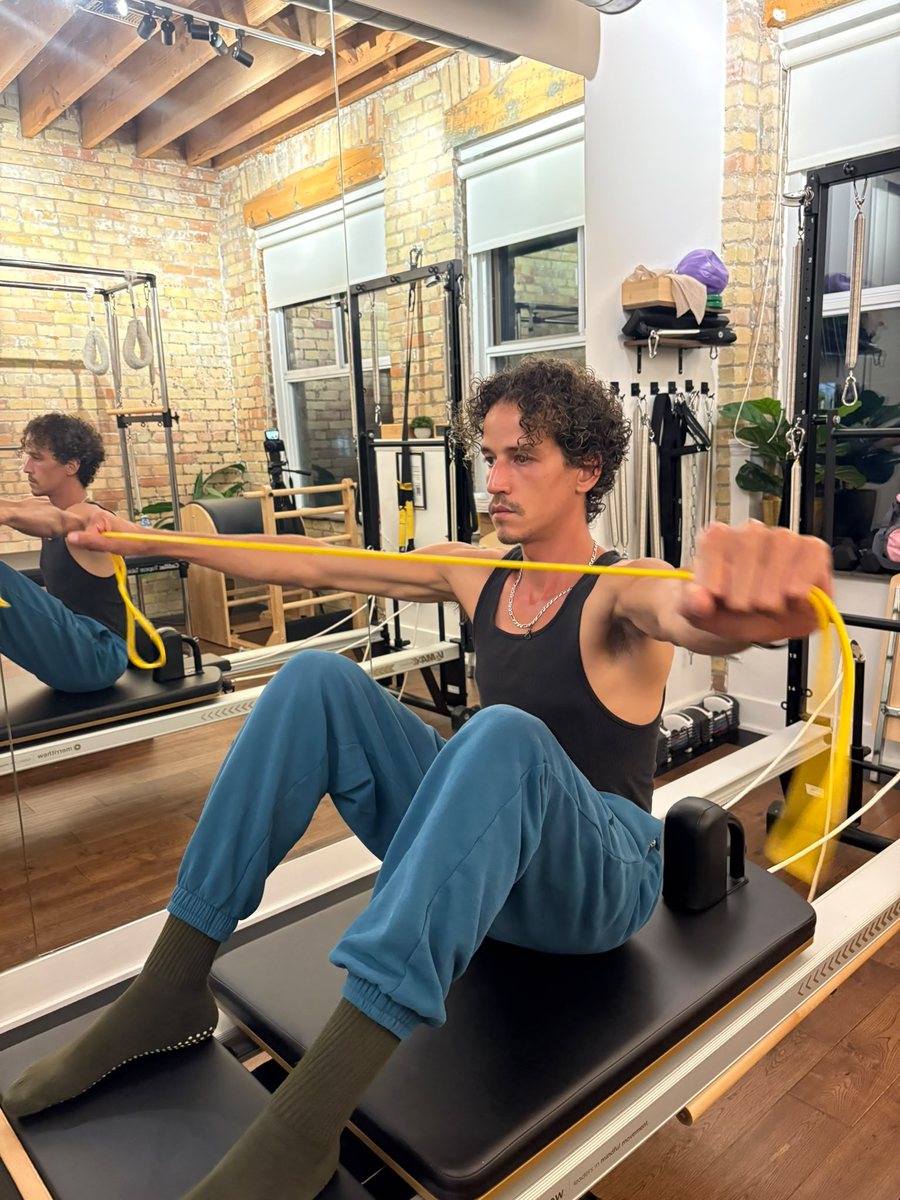
The springs are the surprise. Most people assume they add difficulty; just as often they carry the weight of your own body so that a movement you could not do on the mat becomes possible on the first attempt.
Spring tension, footbar height, strap length and tempo, all set for one body and changed the moment they stop serving it. On a machine that adds load, that is not a luxury.
Where most people first feel their lower back let go. It is usually the point in a first session when someone stops concentrating on getting it right and starts noticing what it feels like.
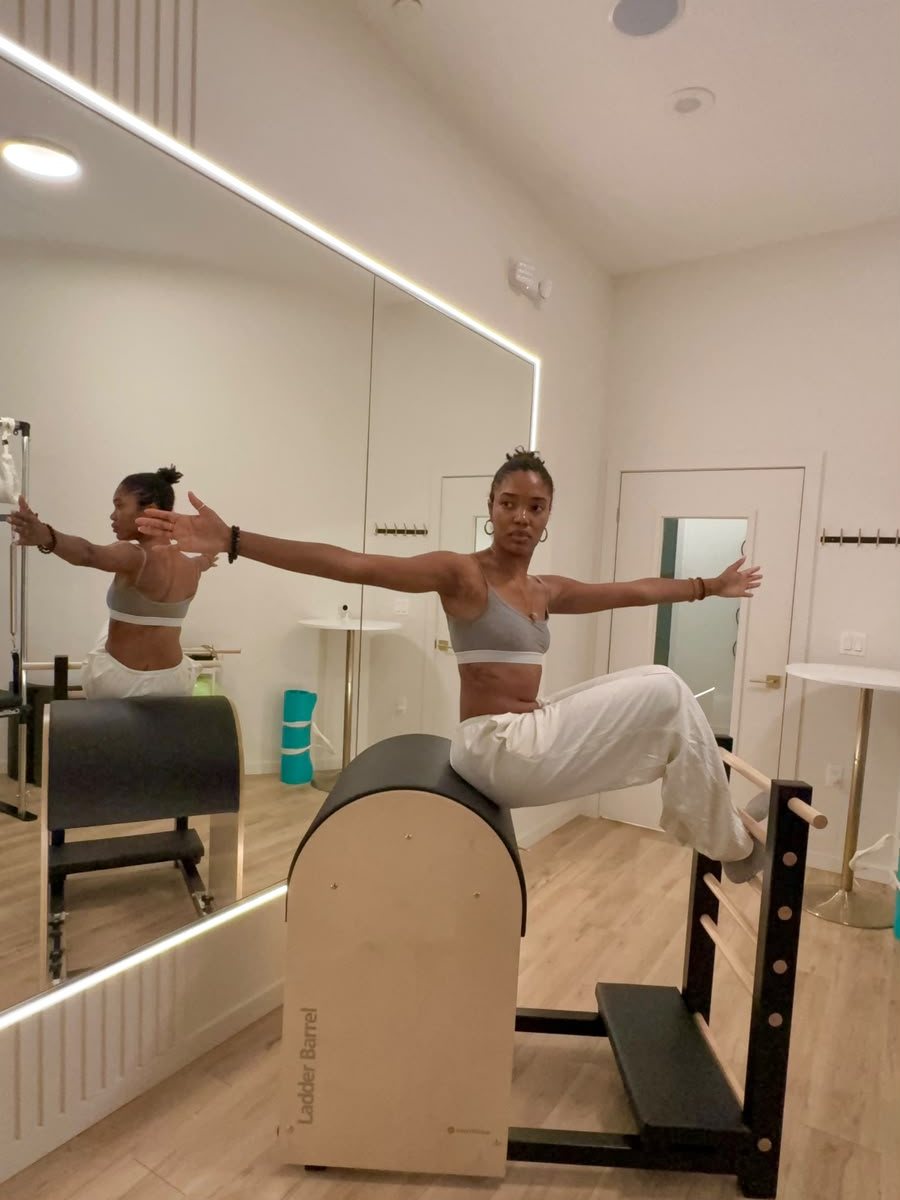
The Cadillac, the Chairs and the Barrels are part of what she teaches, and part of her own practice. She is on them most weeks, on both sides of the work.
The contemporary method built around the spine's natural curves. The training for it is long and examined, and Ruqayyah is certified in mat and reformer.
Yes. She teaches on the Cadillac, the Stability Chair and the Barrels, and she is working towards the Level 1 certification that formalises it.
No. Ruqayyah works as a physiotherapist assistant alongside chiropractors and physiotherapists, but a physiotherapist assistant is not a physiotherapist and a Pilates session is not treatment. What it means in practice is that when your own practitioner has given you instructions, she will follow them rather than improvise around them.
Around two years of teaching mat and reformer, after a background in international modelling and samba dance.